Heard But Never Listened To: How Great Film Scores Disappear in Plain Sight
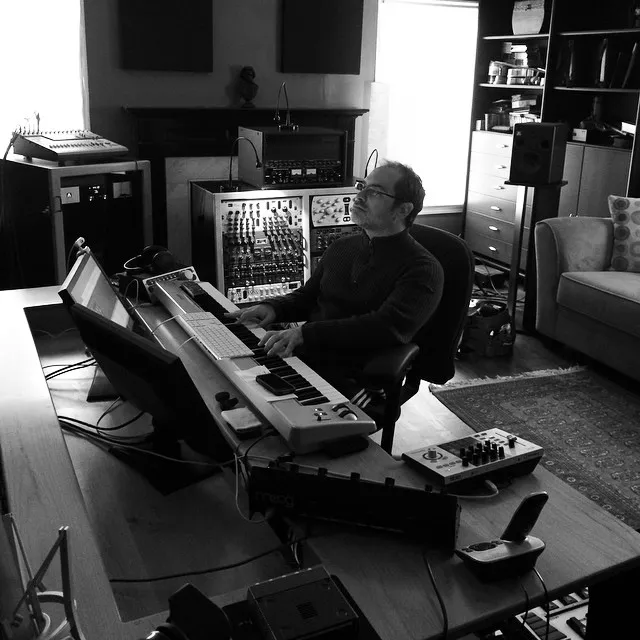
Photo: Chrisconti, CC BY-SA 4.0, via Wikimedia Commons
There's a cruel irony buried inside every great film score: the better it does its job, the less likely you are to notice it exists.
Think about the last time you walked out of a theater — or more realistically, closed your laptop after a late-night streaming session — and immediately looked up who wrote the music. Chances are, you didn't. You thought about the performances, maybe the cinematography if you're that kind of person. You probably texted a friend about the ending. The score? It was just... there. Doing its thing. Quietly holding the whole emotional experience together while you paid attention to literally everything else.
That's not a coincidence. That's the paradox.
The Craft That Succeeds by Vanishing
When Hildur Guðnadóttir won the Academy Award for her Joker score back in 2020, a lot of casual moviegoers had a reasonable reaction: wait, there was a score? Of course there was. It was doing enormous heavy lifting throughout that film — building dread, giving Joaquin Phoenix's increasingly unhinged performance a kind of tragic musical scaffolding, making you feel the character's internal collapse before you could fully articulate why. But it worked so seamlessly that most people absorbed its effects without registering its presence.
Same story with Volker Bertelmann's work on All Quiet on the Western Front, which took home the Oscar in 2023. Critics were effusive. The music press went deep on his unconventional approach, the way he used prepared piano and strange percussive textures to evoke both the mechanical horror of WWI and the youth of the soldiers caught in it. General audiences? They remembered the mud. The explosions. The devastating final sequence. The score had done its job perfectly — which meant it had effectively made itself disappear.
This isn't a new problem, but something about the current streaming era has made it dramatically worse.
Streaming Didn't Create the Problem, But It Sure Didn't Help
Back when moviegoing was a more deliberate act — you drove somewhere, paid for parking, sat in a dark room with strangers — there was a kind of forced attentiveness that came with the territory. You were there. The music had a physical space to fill.
Streaming has fundamentally changed that relationship. You're watching on a laptop while doing other things, or on a TV with mediocre built-in speakers, or on your phone during a commute. The dynamic range that composers spend months perfecting gets flattened. The subtle textural work that makes a score genuinely interesting gets lost entirely in ambient noise. What survives is whatever is loud and obvious enough to cut through the distraction.
And then there's the skip culture. Streaming platforms have trained us to be ruthlessly impatient with anything that feels like it's building toward something. The slow, atmospheric opening of a score — the kind of deliberate musical throat-clearing that composers use to establish mood and theme — is exactly the kind of thing modern viewers instinctively fast-forward through.
The platforms know this. They've designed around it. Netflix's skip-intro button is a small but telling example of how the architecture of streaming actively works against the kind of patient, immersive engagement that lets a score actually land.
The Playlist Problem
Here's another layer to this: even when people do connect with a film score, the way we consume music today tends to strip it of context in ways that undercut what made it interesting in the first place.
A score on Spotify or Apple Music becomes a playlist item. It gets shuffled between other things. The careful sequencing the composer intended — the way themes develop and return, the way silence is used as a compositional element — evaporates. What you're left with is often a collection of nice-sounding instrumental tracks that feel vaguely cinematic but don't communicate much beyond that.
This isn't entirely the platforms' fault. But it does mean that the people most likely to actually engage with film music as music — as a sophisticated art form with its own grammar and ambitions — are a pretty small audience. Everyone else gets the emotional residue without ever quite knowing where it came from.
Why This Matters Beyond Music Nerd Territory
You might be thinking: okay, but so what? If audiences are getting the emotional experience the score is designed to create, does it matter that they're not consciously aware of it?
It matters for a few reasons that go beyond just giving credit where it's due.
First, there's the discovery problem. When audiences don't register scores as a distinct creative element, they're cutting themselves off from an entire dimension of cinema worth exploring. Composers like Ennio Morricone, Bernard Herrmann, and Jerry Goldsmith built bodies of work that reward deep listening in ways that are completely separate from the films they scored. More recent composers — Nico Muhly, Mica Levi, Nicholas Britell — are doing genuinely adventurous work that most moviegoers will never consciously encounter because the entry point (the film itself) doesn't prompt that kind of attention.
Second, invisibility has real industry consequences. When the public doesn't engage with scores as a creative category, the commercial incentive to invest in ambitious, unconventional film music weakens. Why hire a composer willing to take real risks when audiences won't notice either way? The pressure toward generic, unobtrusive background music — the kind that fulfills its functional role without demanding anything from the listener — gets stronger.
Third, and maybe most importantly for what we do here at Underviewed: some of the most genuinely underappreciated work in contemporary cinema is happening in the score. Not in performances that get awards campaigns, not in scripts that get optioned and discussed, but in the music that shapes how you feel about all of it without ever announcing itself.
How to Start Actually Hearing It
The good news is that this is a fixable problem, at least on an individual level. It mostly requires a deliberate shift in attention — which, honestly, is what Underviewed is kind of about anyway.
Next time you watch something that lands emotionally, pause and ask yourself what the music is doing in that moment. Is it leading you toward the feeling, or following the action? Is it giving you information about a character that the dialogue isn't? Is it doing something unexpected that you almost didn't notice?
Seek out scores as standalone listening. Start with something you already love — whatever film hit you hardest recently — and give the score an isolated listen without the visuals. You'll be surprised how much is going on that you absorbed without registering.
And pay attention to who's writing this stuff. Composers like Guðnadóttir, Bertelmann, Britell, and Levi are doing work that deserves to be part of the broader cultural conversation about what makes contemporary cinema great. They're just doing it in a medium that's been conditioned to be invisible.
The algorithm isn't going to surface this for you. It rarely does. But that's kind of the whole point.