They Finally Made It Big — And Ruined It: When Hollywood Discovers Your Favorite Hidden Gem
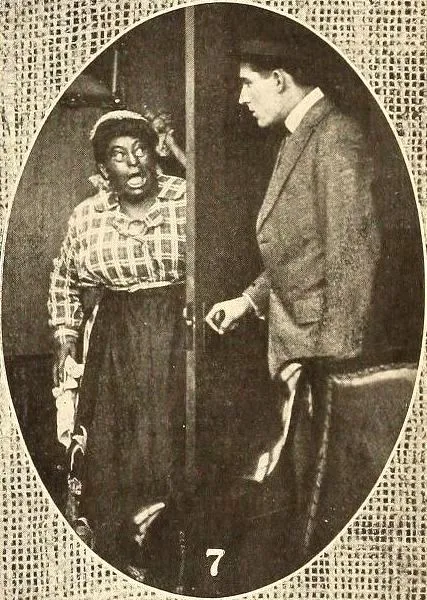
Photo: Majestic Motion Picture Company, Public domain, via Wikimedia Commons
There's a particular kind of grief that comes with watching a movie you've quietly loved for years suddenly get the Hollywood treatment. Not a sequel. Not a spiritual successor. A full remake — wide release, recognizable cast, a trailer cut to a pop song you've definitely heard in three other trailers this year. And somehow, inexplicably, it looks nothing like the thing you fell in love with.
This is the paradox nobody in the industry seems eager to talk about: studios keep reaching into the bargain bin of cinema history, pulling out legitimately underviewed, genuinely original films, and then systematically sanding off everything that made them worth finding in the first place.
The Logic That Doesn't Quite Add Up
On paper, it makes a certain kind of sense. A studio executive discovers a low-budget cult film from the early 2000s — or a foreign-language gem that never cracked 1,000 screens in the US — and sees a story with a proven (if modest) track record. The concept works. The bones are there. Why build something new when you can renovate?
The problem is the renovation metaphor itself. When you gut a house to flip it, you're not preserving it — you're replacing it. And what made these underviewed originals special was almost never the plot. It was the texture. The low-fi aesthetic that felt intentional rather than budgetary. The performances from actors who weren't yet performing for an audience of millions. The pacing that trusted viewers to sit with discomfort a little longer than a multiplex crowd typically will.
Big-budget machinery doesn't just amplify those qualities. It often crushes them entirely.
Case Study: When "Fixing" Means Breaking
Consider the trajectory of films like REC and [Rec]² — Spanish found-footage horror films that were genuinely terrifying precisely because of their constraints. The American remake, Quarantine, arrived in 2008 and did reasonably well commercially. But ask any horror fan which version holds up, and the answer is almost unanimous. The original's claustrophobic dread came from what it couldn't show you. The remake showed you everything, explained everything, and in doing so, explained away the fear.
Or look at The Vanishing — the 1988 Dutch psychological thriller directed by George Sluizer. It's one of the most quietly devastating films ever made, built entirely around an ending so bleak it practically dares you to keep watching. Sluizer himself directed the American remake four years later. Same director. Different film. The studio insisted on changing the ending to something more palatable for American audiences, and Sluizer later expressed regret about the decision. The original is a masterpiece most people in the US have never seen. The remake is a footnote.
These aren't isolated accidents. They're a pattern.
The Discoverability Trap
Here's where the argument gets genuinely complicated, though. There's a version of this conversation where remakes function as a gateway drug. Someone sees the 2023 version of whatever, gets curious, tracks down the 1994 original, and suddenly they're a convert. Streaming has made that journey easier than it's ever been — at least when the original is actually available, which is its own separate disaster worth an entire other article.
But the data on whether this actually happens at scale is pretty thin. Most viewers don't go spelunking for source material. They watch the new thing, assume it's the definitive version, and move on. The remake doesn't introduce them to the original — it replaces it in their mental catalog. Ask someone who's only seen the American Girl with the Dragon Tattoo if they've watched Niels Arden Oplev's Swedish version, and you'll get a lot of blank stares.
What remakes actually do, more often than not, is crowd out the original in search results, in recommendation algorithms, and in cultural conversation. The underviewed film that had a small but devoted following now has to compete with a version that has a $90 million marketing budget. Guess which one wins the Google results page.
What Gets Lost in Translation
There's also a subtler problem specific to American remakes of international films. Studios don't just adapt the story — they relocate it, recontextualize it, and often defang whatever social critique gave it teeth in the first place.
Funny Games, Michael Haneke's 1997 Austrian provocation, was a movie explicitly designed to make audiences uncomfortable with their own appetite for screen violence. Haneke remade it himself in English in 2007, shot-for-shot, almost as an experiment in whether American audiences would receive the same critique in their own language. They mostly didn't. The film underperformed, critics were divided, and the original remained the version serious film people actually assigned meaning to.
The point isn't that remakes are inherently evil — some are genuinely excellent, and a few have even surpassed their source material. But when the source material is already obscure, already underserved by distribution, already operating outside the mainstream, the remake doesn't rescue it. It absorbs it.
The Cult Film Catch-22
What's especially frustrating is that the qualities that make a film cult-worthy are precisely the qualities that make it unadaptable at scale. Cult films earn their following through specificity — a strange tonal register, an unconventional structure, a willingness to be weird in ways that mainstream audiences aren't always invited to appreciate. That specificity is what the devoted fanbase is actually devoted to.
When a studio options one of these films, they're essentially buying the title and the logline. The rest gets negotiated away in development. By the time the remake hits theaters, the original's fans are alienated and the new audience has no idea what they're missing.
It's a lose-lose dressed up as a win-win.
So What's the Alternative?
Honestly? Re-release the originals. Restore them. Put them on a platform where people can actually find them, with some context about why they matter. A well-produced retrospective piece, a 4K restoration on a major streaming platform, or even a limited theatrical re-release would do more for the legacy of a genuinely underviewed film than any remake ever could.
The audience for these movies exists. It's just scattered, and it needs a signal. The remake is a loud, expensive signal pointed in the wrong direction.
Next time a studio announces it's adapting that obscure thriller you've been recommending to people for a decade, don't get excited. Get the original in front of as many people as you can before the algorithm decides the new version is the only version that counts.
Because once that happens, the film you loved doesn't disappear — it just becomes a trivia question.