Sundance Darlings and the Distribution Graveyard: What Happens After the Standing Ovation
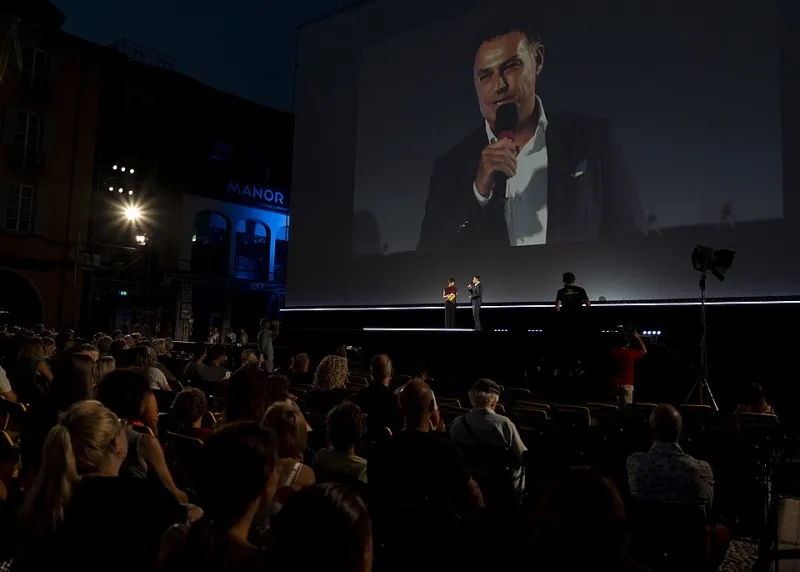
Photo: Kalai Ramu, CC BY-SA 4.0, via Wikimedia Commons
Every January, Park City, Utah transforms into the most optimistic place on earth. Filmmakers who mortgaged their apartments, maxed out credit cards, and called in every favor they'd ever been owed finally get to watch strangers cry, laugh, and leap to their feet in a packed screening room. The air smells like possibility. Deals get whispered about in lift queues. Bidding wars break out over films shot on shoestring budgets in someone's childhood home.
Then, somewhere between the acquisition announcement and your ability to actually watch the thing, something goes very wrong.
This is the part of the festival story that doesn't make the trades.
The Acquisition Trap
When a distributor acquires a film at Sundance, SXSW, or Tribeca, it sounds like the finish line. The press release goes out. The filmmaker does a round of interviews. Everyone talks about the movie like it's already on its way to you. What that announcement actually represents, though, is the beginning of a second, far more treacherous journey.
Distribution deals are complicated instruments. A studio or streamer acquiring a film doesn't automatically mean they're committed to releasing it — at least not in any meaningful way. Minimum guarantees, marketing spend obligations, and release window clauses are all negotiable, and in many cases, the acquiring company holds enormous leverage over when and whether a film actually surfaces.
Small distributors in particular sometimes acquire festival titles with genuine enthusiasm and then run into the wall of their own release calendars. A company with a small theatrical footprint can only push so many films per quarter. When a bigger, safer title needs that slot, the festival darling gets bumped. Then bumped again. Then quietly moved to video-on-demand with a budget that wouldn't cover a single billboard in Los Angeles.
When Buzz Becomes a Burden
Here's a counterintuitive problem: sometimes the festival heat itself becomes the obstacle.
A film that generates enormous buzz at Sundance arrives at its distributor carrying a specific identity — the kind of movie that sophisticated festivalgoers loved in a darkened room in January. That's a hard identity to translate into a mass-market campaign. Marketing departments, which operate almost entirely on precedent, struggle to position films that don't fit a clean genre box. A quiet, character-driven drama about grief that made people sob at 9 AM in Park City doesn't come with an obvious trailer template.
So the marketing team asks for more time. More time turns into a delayed release. A delayed release means the film misses the awards calendar it was positioned for. Without awards positioning, the theatrical run shrinks. A small theatrical run produces disappointing box office numbers that then get used to justify a minimal streaming rollout.
The film that everyone in the industry was talking about in January becomes the film nobody can find by October.
The Streaming Mirage
For a while, the rise of streaming felt like it would solve this problem entirely. Netflix, Amazon, and their various competitors were throwing serious money at festival acquisitions, promising that their global platforms would finally give underseen films the audience they deserved. And occasionally, that's exactly what happened.
But streaming platforms have their own version of the distribution graveyard. A film acquired by a major streamer and then buried under a weak thumbnail, zero promotional push, and no editorial placement on the homepage might as well not exist. The platform's internal metrics quickly identify it as a low-performer, which reduces its algorithmic visibility, which confirms it as a low-performer. It's a self-fulfilling prophecy, and plenty of genuinely excellent films have disappeared into that loop.
The Sundance acquisition that generates a splashy headline in Variety might end up with a quieter fate than a film that never got acquired at all — at least the latter still has a filmmaker actively trying to get it seen.
The Films That Fell Through
You don't have to look hard to find examples. Festival circuit veterans will rattle them off like a list of old friends who moved away.
There are films that won audience awards at major festivals and then sat in limbo for two or three years while their distributors figured out what to do with them. There are acquisitions that got caught in corporate mergers — the company that bought the film gets absorbed by a larger entity that has no emotional investment in the title and even less financial incentive to release it properly. There are films where the original champion inside the acquiring company left for another job, taking the institutional enthusiasm with them.
And then there's the category that nobody talks about openly: films that distributors acquire specifically to prevent a competitor from having them, with no real intention of doing anything significant with the release. It happens. It's not illegal. It's just quietly devastating for the people who made the movie.
What Filmmakers Actually Face
Talk to independent filmmakers who've been through a festival acquisition cycle and you'll hear a consistent emotional arc. The elation of the deal. The cautious optimism of early development meetings with the distributor. The growing unease as release dates shift. The helplessness of watching your film's moment pass while contractual obligations prevent you from doing anything about it.
Some filmmakers negotiate reversion clauses that allow them to reclaim their films if certain release benchmarks aren't met. That's become more common as the industry has grown more familiar with the pattern. But reversion clauses take time to trigger, and by the time a filmmaker gets their film back, the cultural moment has often passed.
Others have started going directly to digital self-distribution platforms, bypassing the traditional acquisition process entirely. It's a trade-off — less prestige, less infrastructure, but also less waiting around for someone else to decide your film's fate.
Why This Keeps Happening
The honest answer is that the incentive structures of the film industry aren't really built around getting good movies to audiences. They're built around managing risk, protecting market position, and generating returns for investors. A genuinely original, hard-to-categorize film is, from a purely financial perspective, a risk-management problem.
Festivals exist in a kind of beautiful bubble where that calculus is temporarily suspended. For a few days in Park City or Austin, a film can be evaluated purely on its own terms. The audience in that room isn't thinking about four-quadrant appeal or opening weekend projections. They're just watching something and feeling things.
The gap between that experience and the industrial machinery of distribution is where great films go to disappear.
The Underviewed Truth
For every festival film that makes it to your streaming queue, there are others that didn't. Films that earned their standing ovations, found their audiences in those early screenings, and then got caught in a system that didn't know what to do with them.
Some of them will resurface eventually — a determined filmmaker, a passionate programmer at a smaller distributor, a single viral moment that reignites interest. But a lot of them won't. They'll exist as footnotes in festival databases, as memories for the few hundred people who were lucky enough to be in the room.
The algorithm didn't bury these ones. The industry did it before the algorithm ever got the chance.