Buried in the Case: The Director's Commentary Crisis Nobody in Streaming Wants to Fix
The Best Film School You Can No Longer Attend
There's a version of Paul Thomas Anderson sitting in a recording booth sometime around 2002, walking you through every single frame of Punch-Drunk Love — why he shot Adam Sandler that way, what the Shelley Duvall references actually mean, how the sound design was built from scratch to mirror Barry Egan's anxiety. That commentary track exists. It's genuinely extraordinary. And unless you own the DVD or know someone who does, you will almost certainly never hear it.
This is the quiet catastrophe that nobody in the film conversation seems particularly interested in addressing. While the industry debates 4K restorations and day-and-date streaming releases, an enormous archive of filmmaker insight is slowly becoming inaccessible — not because it was lost to a fire or a flood, but because studios looked at bonus features and decided they weren't worth the licensing fees and server space.
What We're Actually Losing
It's worth being specific here, because "bonus features" sounds like marketing fluff. It isn't. At their best, DVD and Blu-ray supplements were something closer to a parallel cinema education.
Ridley Scott's commentary on the Blade Runner Final Cut is essentially a two-hour masterclass in production design philosophy. Werner Herzog's tracks — particularly on Fitzcarraldo and Aguirre, the Wrath of God — blur the line between film criticism and autobiography in ways that reframe the movies entirely. The four-hour documentary Anatomy of a Scene included on the Almost Famous Criterion release contains Cameron Crowe reconstructing his own adolescence in real time. These aren't extras. They're companion texts.
Then there's the deleted scene question, which is its own separate tragedy. The extended cut of Aliens included on the 1986 special edition LaserDisc — and later the DVD — contains scenes that fundamentally change the emotional stakes of the entire film. Ripley had a daughter. That information colors everything. If you're watching the theatrical cut on Netflix right now, you don't know that. You're watching a different, lesser version of the story and the platform you're using has no mechanism to tell you otherwise.
Why Streaming Never Bothered
The business logic here isn't complicated, even if the cultural consequences are. Streaming platforms license content. They don't typically acquire the full bundle of rights that comes with physical media distribution. The bonus features, in many cases, involve separate agreements with directors, composers, interview subjects, and documentary producers — each of which requires its own deal.
For a studio calculating whether to pay for those additional rights clearances versus just getting the movie onto the platform and collecting subscriber dollars, the math almost never works out in favor of the extras. Viewers don't cancel subscriptions because a director's commentary is missing. They cancel because the content library feels thin. So the commentary goes.
There's also an interface problem. Streaming platforms are built around the assumption that you know what you want to watch and you want to start watching it immediately. The entire UX is optimized for frictionless consumption. A supplementary menu with six documentary featurettes and an isolated score track runs completely counter to that design philosophy. Even if the content existed on the platform, the platform would have no real incentive to surface it.
The Criterion Carve-Out (And Its Limits)
The one major exception most cinephiles will point to is the Criterion Channel, which has made a genuine effort to carry over the supplementary materials from its physical releases into the streaming environment. And credit where it's due — that's real. Watching a Criterion film on the channel and being able to flip over to a 1970s interview with the director or an essay by a contemporary critic is genuinely closer to what the DVD experience offered.
But the Criterion Channel serves a specific and self-selecting audience. It's not where most people are watching movies. And even within that ecosystem, not everything transfers. Rights complications, expired licenses, and the sheer volume of material that existed across decades of Criterion releases mean that plenty of things fall through the cracks even there.
The broader mainstream — the person watching Boogie Nights on Max or The Thin Red Line on a Paramount bundle — has no equivalent. They get the film. That's it.
The Preservation Argument Studios Keep Ignoring
Here's the thing that should make archivists genuinely nervous: physical media doesn't last forever either. DVD and Blu-ray disc rot is real. Discs pressed in the 1980s and 1990s are already degrading. The window to properly digitize and archive this supplementary content isn't infinite, and right now nobody with the resources to do it systematically seems particularly motivated.
The Library of Congress has a film preservation mandate, but it's focused on the films themselves — not the making-of documentaries and audio commentaries attached to them. Most studios don't maintain comprehensive internal archives of their own bonus content. The materials exist on discs that are sitting in warehouses or, increasingly, in the bins at used media stores being sold for a dollar apiece.
There's a real argument that a director's commentary recorded at the height of a filmmaker's powers is itself a primary historical document. When Stanley Kubrick gave rare recorded interviews, film scholars treated them like artifacts. The commentary track John Carpenter recorded for The Thing is, functionally, the same kind of thing — an extended, thoughtful reflection on craft from a master of the form. It just happens to be packaged with a movie instead of published in a journal.
What a Real Fix Would Look Like
It's not as though the solutions are technically complicated. A streaming platform with the licensing relationships and the will to do it could build a proper supplementary layer into their interface. Studios could treat bonus content as part of the archival package when negotiating streaming deals rather than as a throwaway add-on. An industry consortium could fund a proper digitization effort for at-risk physical media.
None of this is happening at any meaningful scale, because none of it generates immediate revenue. The content that gets preserved is the content that makes money. Director commentaries don't make money. So they sit.
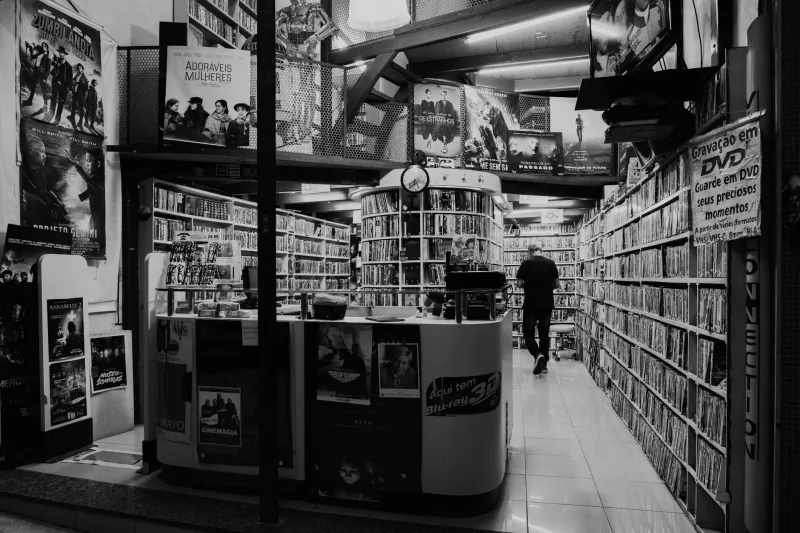
In the meantime, the best advice for anyone who actually cares about this stuff is genuinely analog: go find the discs. Check eBay. Hit the used media stores. The Magnolia DVD with PTA's commentary is out there for a few bucks, and it's worth more than most film podcasts you'll listen to this year. The knowledge isn't gone yet. It's just inconvenient to access, which in the streaming era is almost the same thing.