Gone But Not Forgotten: Tracking Down the Cult Favorites That Vanished When Their Streaming Homes Died
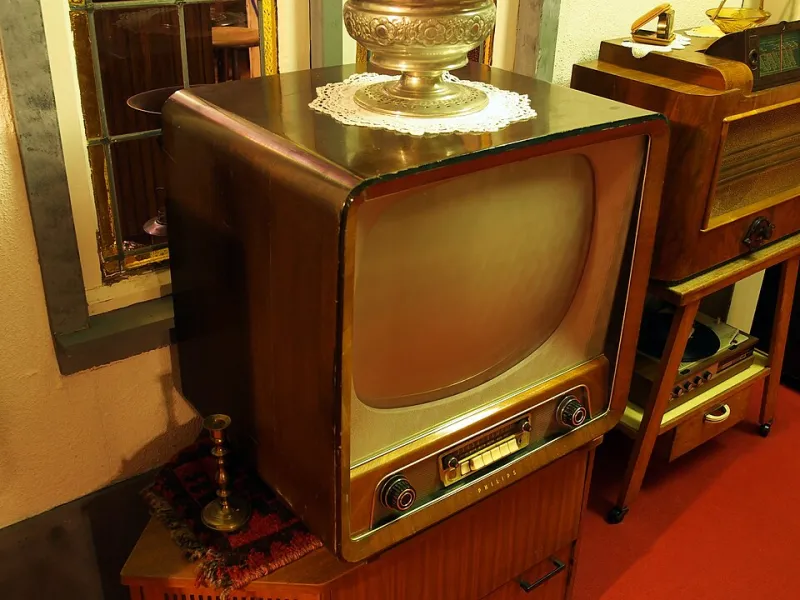
Photo: Alf van Beem, CC0, via Wikimedia Commons
There's a specific kind of grief that hits when you go to rewatch something you love and the platform it lived on simply... doesn't exist anymore. No forwarding address. No migration notice. Just a dead link and a vague memory of a login password you definitely wrote down somewhere.
This is the quiet crisis of the streaming era that nobody in Silicon Valley wants to talk about. We were sold on the idea that digital meant permanent — that unlike a VHS tape left in a hot car or a DVD scratched beyond recognition, your favorite obscure Italian horror film or that one brilliant Canadian mockumentary would always be just a few clicks away. Turns out, that was optimistic at best and actively misleading at worst.
Let's talk about what actually happened, where some of these titles ended up, and why this keeps being a problem that the industry refuses to take seriously.
The Graveyard Is Bigger Than You Think
Most people remember FilmStruck shutting down in 2018 with the kind of sadness usually reserved for an independent bookstore closing. And fair enough — that platform was genuinely special. It was a joint venture between Turner Classic Movies and the Criterion Collection, and it curated exactly the kind of film library that serious movie fans had been dreaming about since broadband became a thing. When WarnerMedia pulled the plug, citing business restructuring, thousands of titles suddenly had nowhere to live.
But FilmStruck is just the headline. Quibi launched in April 2020 and was dead by December of that same year, taking with it a genuinely weird catalog of short-form content that, love it or hate it, simply ceased to exist for most people. Fandor, once a haven for independent and international cinema, went through multiple near-death experiences before finding a kind of zombie afterlife. MUBI has survived but regularly rotates its catalog in ways that can feel almost deliberately designed to frustrate anyone who bookmarked something and came back two weeks later.
And then there's the licensing carousel — the mechanism by which a film can be on Netflix one month, gone the next, and inexplicably on Peacock six months after that. It doesn't kill the content outright, but it makes finding it feel like a part-time job.
So Where Did Everything Actually Go?
Here's the practical stuff, because sometimes you just want to watch the movie.
The Criterion Collection, which lost its FilmStruck home, eventually found a new one on the Criterion Channel — their own standalone platform that launched in 2019. If you were a FilmStruck subscriber mourning the loss of its arthouse library, the Criterion Channel is genuinely the closest thing to a spiritual successor. It's not free, but at around $10 a month it's one of the more defensible streaming subscriptions for anyone who actually cares about film history.
A lot of what Fandor used to carry has scattered across Mubi, Tubi (which is free and ad-supported), and the Plex free tier. Tubi in particular has quietly become one of the more interesting places to find cult horror, forgotten exploitation cinema, and international films that never got a proper US theatrical release. The interface is clunky and the ads are annoying, but the depth of the catalog is legitimately surprising.
For Quibi's original content — the stuff that was actually produced for that platform — Roku eventually acquired the library and rebranded it as Roku Originals. So if you were one of the twelve people who got genuinely invested in Most Dangerous Game or wanted to watch Dummy, those titles are now on The Roku Channel, still free with ads.
HBO Max content that got pulled during the Discovery merger chaos is a messier situation. Some of it reappeared on Max. Some of it is gone in ways that feel more legally and financially complicated than a simple rights issue. A few titles — most infamously the animated film Batgirl — never got released at all, which is a different but related disaster.
Why Platforms Kill Their Niche Content First
Here's the thing that makes this genuinely maddening from a cultural preservation standpoint: the content that disappears first is almost always the stuff that mattered most to the smallest but most devoted audiences.
Big tentpole movies and mainstream TV shows have leverage. Studios fight for them, licensors know they're valuable, and they tend to find new homes relatively quickly. But the foreign language film that only 40,000 people have ever seen? The documentary series that got critical raves but minimal viewership? The cult horror anthology that built a community of obsessives? Those are the first things that get cut when a platform is tightening its budget or a licensing deal comes up for renewal and nobody wants to pay the asking price.
Streaming platforms are fundamentally algorithmic businesses. Content that doesn't generate enough watch-time data to justify its licensing cost gets deprioritized, then dropped. The niche stuff — the exact content that Underviewed exists to champion — is structurally disadvantaged in a system built around engagement metrics and broad audience appeal.
The Preservation Problem Nobody Wants to Own
What makes all of this worse is that digital streaming was supposed to solve the accessibility problem, not create a new version of it. Film preservation used to be about physical deterioration — nitrate fires, flooded vaults, studios that didn't bother keeping prints of their own movies. We solved most of that. Now we've created a new fragility: content that exists in perfect digital fidelity but is locked behind licensing agreements, corporate restructuring decisions, and platform economics.
The Internet Archive does what it can, and there are passionate communities doing preservation work through less official channels. But there's no systemic solution. The Library of Congress preserves films it deems culturally significant, but that process is slow and selective. Streaming platforms have no legal obligation to ensure their content remains accessible when they shut down or lose rights.
Some film scholars and archivists have been pushing for legislative solutions — requirements that platforms deposit digital copies with cultural institutions before licensing agreements expire. It's a reasonable idea that has gone essentially nowhere in Congress, because the entertainment lobby has very little interest in creating obligations that complicate their ability to use content removal as a tax strategy.
What You Can Actually Do Right Now
If you're a fan of niche content and you want to protect your access to it, the most honest advice is: physical media isn't dead and you should probably own the things you actually love. A Blu-ray sits on your shelf forever. A streaming license expires.
Beyond that, the Criterion Channel, MUBI, and Tubi are your best bets for finding cult and arthouse content that's fallen off the major platforms. Letterboxd's community watchlists are genuinely useful for tracking down where specific films are currently streaming. JustWatch does the same thing in a more utilitarian way — search any title and it'll tell you every legal streaming option available in the US right now.
And when something you love is available to stream, watch it. Leave a review. Tell someone about it. The algorithmic logic that kills niche content is engagement-based, which means the more people who engage with it, the harder it is to justify removing.
It's not a perfect solution. But then again, neither was FilmStruck, and we still miss it.