Lost in the Shuffle: Why Streaming Fragmentation Is Killing Your Chances of Finding Something Great
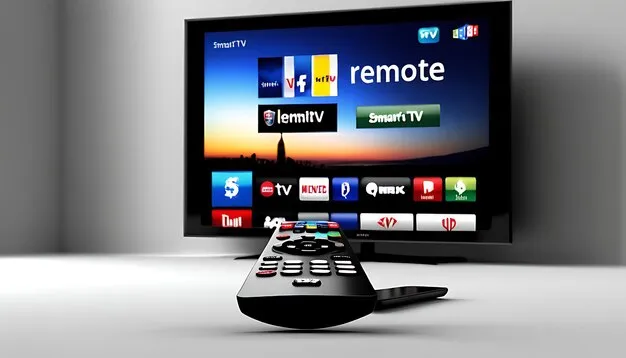
Photo: remote control television multiple streaming service logos screens, via img.freepik.com
Remember when you used to flip through cable channels on a lazy Sunday afternoon and accidentally land on some weird, wonderful movie you'd never heard of? Maybe it was a mid-90s thriller that somehow held up, or a foreign comedy that aired at 2 a.m. on IFC. You weren't looking for it. It found you. That kind of happy accident — the backbone of how a lot of us built our taste in film and television — is quietly becoming extinct.
The culprit isn't laziness. It's math. Somewhere between Netflix's password-sharing crackdown, the launch of Max, the rebranding of Paramount+, and the quiet implosion of a half-dozen smaller services, the streaming landscape fractured into something that actively punishes curiosity. You're no longer browsing one big video store. You're running between a dozen specialty shops, each one convinced its window display is the only thing worth your attention.
The Illusion of Infinite Choice
Here's the uncomfortable truth about streaming in 2024: more platforms does not mean more discovery. It means more noise. According to data from Reelgood and JustWatch, the average American household now subscribes to between four and five streaming services simultaneously. That sounds like abundance. In practice, it's decision paralysis with a monthly fee attached.
Each platform's recommendation algorithm is trained to keep you on that platform. Netflix isn't going to suggest you hop over to Mubi to catch a slow-burn Italian thriller from 2019. Hulu isn't surfacing the underseen documentary that's killing it on Peacock. Every service is an island, and the bridges between them have been deliberately burned.
What gets buried in this system? Exactly the kind of content this site exists to champion. Mid-budget dramas without marquee names. Foreign-language films that didn't win an Oscar. Genre hybrids that confuse the categorization bots. Limited series that aired during a news cycle nobody could look away from. These are the titles that need discovery the most — and they're the ones the algorithm is least equipped to surface.
Which Platforms Are the Worst Offenders?
Not every service handles this equally badly, and it's worth being specific.
Netflix has the most aggressive recommendation engine in the business, which sounds like a compliment until you realize it's also the most self-referential. The platform has a well-documented tendency to spotlight its own originals regardless of quality, while licensed titles — often including some genuinely exceptional older films — get shuffled into digital obscurity within weeks of arriving. A movie can land on Netflix, generate zero algorithmic push, and quietly disappear before most subscribers even knew it existed.
Max (formerly HBO Max, formerly just HBO) carries arguably the deepest catalog of prestige content of any major streamer, but its interface remains one of the most chaotic in the industry. Great films from the Criterion-adjacent Warner Archive collection sit two or three menu levels deep, effectively invisible to anyone who isn't already hunting for them.
Amazon Prime Video is its own special case. The sheer volume of content — much of it low-quality filler — creates a signal-to-noise problem that's almost satirical. Genuinely strong titles get lost between knockoff action movies and content that exists primarily to justify the Prime membership fee.
Mubi and The Criterion Channel, to their credit, are built around curation rather than volume. They're not perfect, but their editorial approach — human-selected programming, rotating collections, thematic context — actually supports discovery in ways the algorithmic giants simply don't.
The Rotating Door Problem
Fragmentation isn't just about what's available. It's about what disappears. Licensing deals expire. Libraries get yanked without warning. A film that was on Netflix in January might be on Peacock by April and gone entirely by August. For underrated titles without an active fanbase drumming up attention, this rotating door is essentially a death sentence.
Consider how discovery actually works for most people. Someone hears a recommendation, makes a mental note, forgets about it for three weeks, then finally opens their laptop to watch it — only to find it's no longer available anywhere they subscribe. That friction kills momentum. And for a film that was already fighting for attention, lost momentum rarely comes back.
This is a structural problem, not a personal failing. The streaming ecosystem was not designed with the casual browser in mind. It was designed to maximize engagement metrics on a per-platform basis, which is an entirely different goal.
Reclaiming the Accidental Discovery
So what can you actually do? A few things, and none of them require a spreadsheet.
Use aggregator tools. Sites like JustWatch and Reelgood let you search across platforms simultaneously, which at minimum reduces the friction of hunting down a specific title. More usefully, they can show you what's expiring soon — which is a surprisingly effective way to surface content worth prioritizing.
Follow human curators, not algorithms. Film Twitter (yes, it still exists in various forms), Letterboxd lists, and newsletters from critics you trust are doing the work that recommendation engines have largely abandoned. A well-maintained Letterboxd list from someone with taste you respect will consistently outperform anything Netflix's homepage offers you.
Treat Mubi and Criterion Channel as your discovery layer. Even if you only subscribe to one of them for a month or two at a time, the programming philosophy of both platforms is genuinely oriented toward surfacing overlooked work. Think of them less as entertainment subscriptions and more as film education with a rotating syllabus.
Let go of the queue. One of the quieter psychological traps of streaming is the endless watchlist — a graveyard of good intentions that creates anxiety rather than excitement. Pick something. Watch it. The best discoveries often happen when you stop optimizing and just commit.
The Bigger Picture
The streaming wars were supposed to be good for viewers. More competition, more content, more choice. And in some narrow sense, that's true. There is more content available than at any point in the history of moving images.
But availability and discoverability are not the same thing. A film that exists on a platform nobody browses past the first two rows might as well not exist at all. The titles that deserve an audience — the ones that are weird, quiet, challenging, funny in unexpected ways, or simply excellent without being obvious about it — are precisely the ones that get swallowed by a system built to reward familiarity and volume.
That's the whole reason Underviewed exists. Not because great content is hard to make, but because the machinery built to connect audiences to content has some pretty significant blind spots. Knowing those blind spots exist is the first step to working around them.
The shuffle is real. But so is the good stuff waiting on the other side of it.